Route Optimization for Bakery Delivery
Fresh bread is a race against the clock. Here is how route optimization helps a bakery hit every morning delivery window, load vans in the right order, and rebuild routes when the orders change overnight.
 Jasmine Brooks||6 min read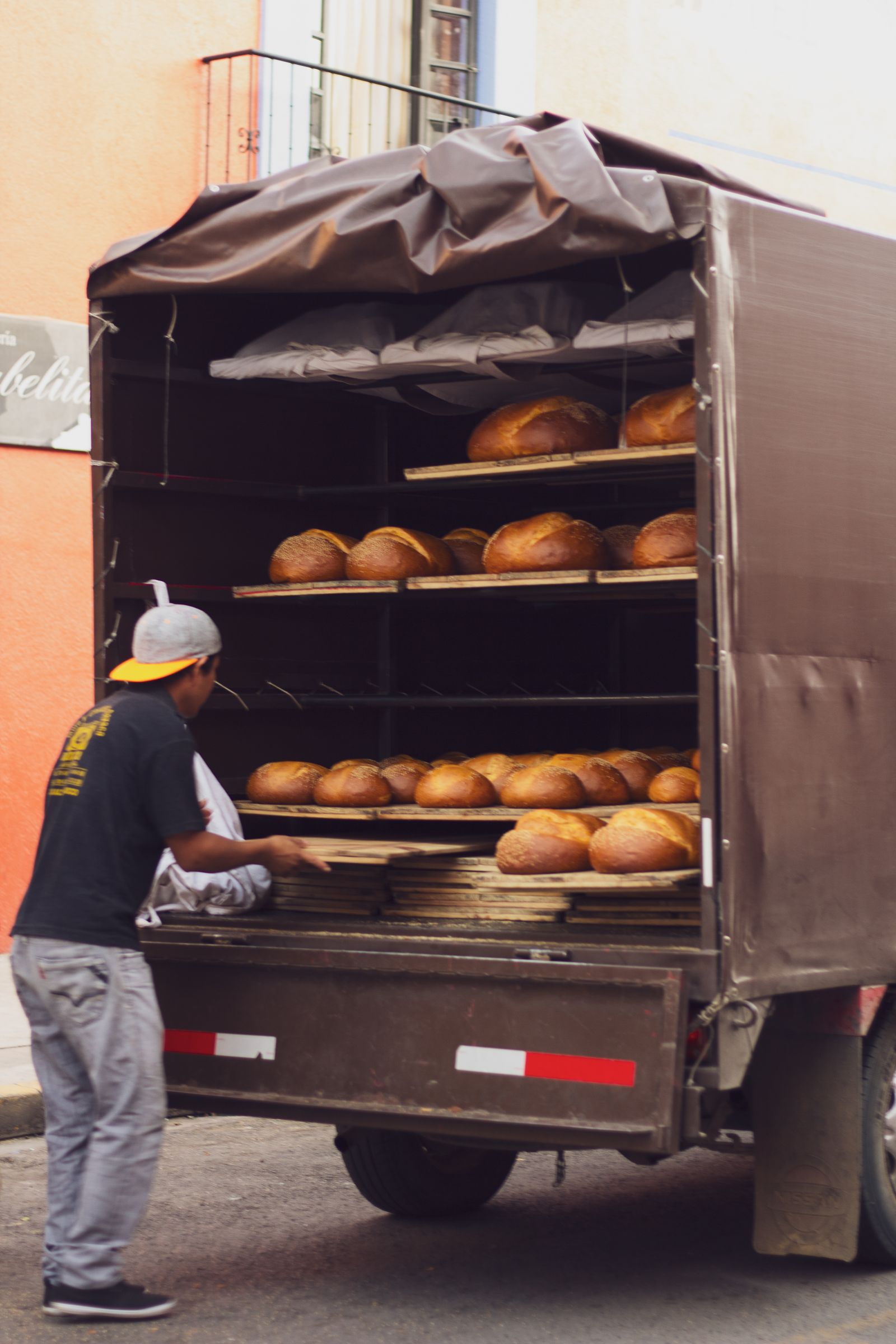
A bakery's delivery run is the most unforgiving route in food. The product is at its best for a few hours, the customers all want it at roughly the same time, and that time is before most people are awake. A loaf that turns up at the cafe at half past ten, after the breakfast rush it was baked for, is not a late delivery. It is a wasted one.
So the morning run is a race against two clocks at once: freshness, and the moment each account opens its doors. Win both across thirty or forty wholesale stops with two or three vans, every single morning, and you have a routing problem that is genuinely hard. This is what route optimization is built for.
Why bakery delivery is a hard routing problem
Plenty of businesses deliver. A few things make the bakery version especially tight.
- The windows are brutal and they cluster. Cafes want bread before they open. Restaurants want it before prep. Grocers want it before the morning shoppers. Almost every stop wants to be early, and "early" is a narrow band, not a preference.
- The order changes overnight. Wholesale accounts adjust quantities daily, standing orders flex, a restaurant doubles up for an event. The route you could have planned last week is not the route you need tomorrow.
- The van has a packing order, not just a capacity. Crates and trays go in last-on, first-off. If the van is loaded in the wrong sequence, the driver is climbing over the back stock at every stop. Loading order should match the route, in reverse.
- The clock on the driver matters too. Early starts, legal hours, and a hard stop when the morning window closes. A route that technically visits everyone but finishes at eleven has already failed most of its stops.
The constraints that decide your morning
A route plan for a bakery is only useful if it respects the rules the kitchen and the road impose:
- Delivery time windows. The single most important constraint. Each account has a "by" time, and the plan has to land inside it. The optimizer should treat these as hard, not aspirational.
- Vehicle capacity. Crates, trays, or racks per van. When the morning's orders exceed one van, the question becomes how to split the city between vans so both finish on time.
- Loading sequence. The order stock goes into the van so it comes out in route order. A route that ignores this is technically optimal and practically miserable.
- Service time per stop. Carrying six crates into a restaurant's back kitchen is not the thirty-second handoff a corner shop is. Set it per account.
- Depot start and driver shift. Everyone leaves from the bakery at the same early hour and has a window of working time before the deliveries stop being worth making.
The instinct is to plan the shortest loop. For bakery delivery that is the wrong first move. Order the stops by their delivery windows first, then let the optimizer find the shortest path that still hits every window in time. The goal is not the prettiest loop, it is bread on the shelf before the doors open.
See the core move on one route
Here is the idea on a single van's route: the same stops, resequenced for a shorter, tighter run.
On the morning run, a shorter route is not only cheaper, it is earlier. Every minute the optimizer saves in driving is a minute of slack against the windows that matter. (For the bigger picture on why this problem is hard to solve well, see what route optimization actually is.)
How optimization changes the morning run
With the windows, capacity, and load order modeled, an optimizer does the things a 4am whiteboard cannot do reliably under pressure:
- Builds routes that hit every window. It sequences each van so the early accounts come first and no stop is scheduled after its cutoff.
- Splits the work across vans sensibly. Two or three vans get balanced loads and sensible patches, so they are not crossing the city past each other and one is not finishing an hour after the rest.
- Plans the load order. Because it knows the visiting sequence, it can tell the loaders the order to stack the van so it unloads cleanly, stop by stop.
- Rebuilds when the orders land. When the overnight order sheet is final, you re-optimize and the routes reform around the real quantities and stops, instead of someone redrawing them by hand while the ovens are running.
A practical way to start
You can get most of the benefit without modeling every nuance up front:
- List your accounts with their windows. Address, the "deliver by" time, and rough quantity. That, plus your vans, is enough to plan a real morning.
- Set service times honestly. A back-of-kitchen drop with six crates is not a counter handoff. Even rough categories make the plan believable.
- Plan against the finalized orders. Lock the order sheet, then optimize, so the routes match what actually goes on the vans.
- Hand drivers an ordered route on their phone. With proof of delivery, so a disputed drop is a tap, not a phone call later.
Once your routes are stable, they tell you more than the driving order. The first stops on each van are the first bread that has to be out of the oven and the last crates loaded. A good route plan quietly schedules your loading bay and even nudges your bake order, not just your driving.
What to expect
Skip anyone quoting a guaranteed figure. The grounded version, from what providers across the industry typically report, is a range: roughly 10 to 30 percent less driving and drive time once routes are properly built, and a large reduction in the time spent planning them each day. For a bakery the more valuable currency is often earliness and reliability: more deliveries landing inside their window, fewer "where is my bread" calls, and less product wasted because it arrived after the rush it was meant for.
The cheapest route and the freshest route are not always the same route. If your optimizer only minimizes distance, it can quietly push a sensitive account later to save a mile. Make the delivery windows hard constraints so freshness wins the tie, and treat the mileage saving as the bonus on top.
FAQ
Can route optimization guarantee my morning delivery windows?
It cannot bend physics, but it treats each window as a hard constraint and builds routes that hit them where it is possible, and flags when it is not (for example, when a late-finalized order genuinely cannot be served on time with the vans you have). That early warning is itself valuable.
Our orders change every night. Does that break the plan?
No, it is the normal case. You optimize against the finalized order sheet each morning, so the routes reflect the real quantities and stops for that day rather than a stale template.
Does it handle loading the vans in the right order?
Because the optimizer knows each van's visiting sequence, it can produce the load order (last-on, first-off) so the van unloads cleanly stop by stop, instead of the driver digging past the back stock at every door.
What if I run more than one van?
That is where it helps most. It splits the morning's stops across vans by window, capacity, and geography so each van carries a balanced load, stays in a sensible area, and finishes inside the morning rather than one van running long.
The takeaway
Bakery delivery is logistics with a stopwatch. The product is perfect for only a few hours, and nearly every customer wants it in the same narrow morning band. Route optimization that treats delivery windows as hard limits, plans the load order, and rebuilds around each night's real orders turns a stressful 4am puzzle into a plan the drivers can simply follow. The quickest way to see it is to drop in a morning's accounts and watch the routes line up against the clock.
Keep reading
Route Optimization for Window Cleaning Businesses
Window cleaning is a routing business in disguise. Here is how smart sequencing of your round cuts windshield time, fits more jobs in a day, and survives a rained-out morning.
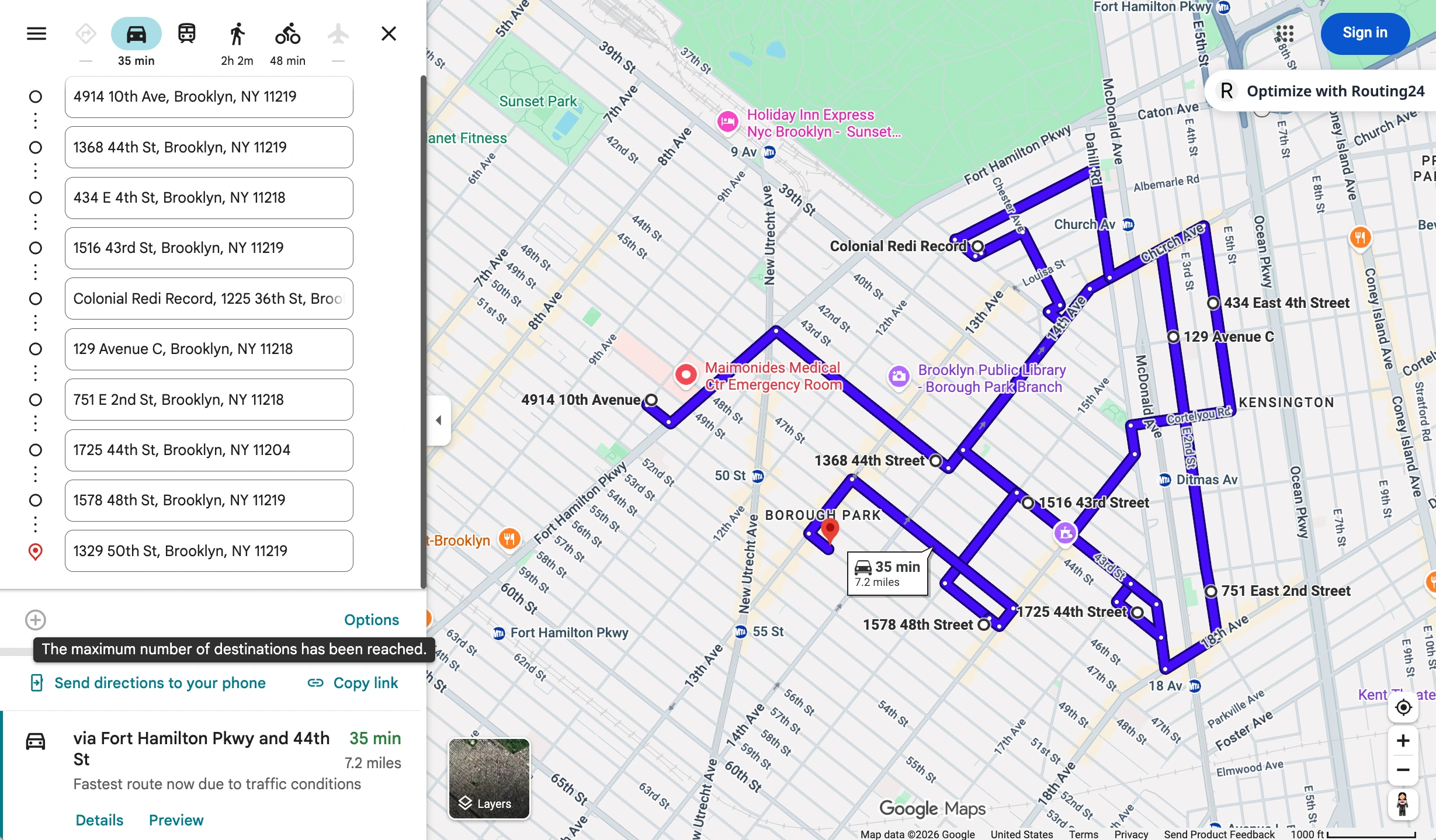
Google Maps Route Optimization: How to Optimize More Than 10 Stops
The 10-stop-per-route limit in Google Maps explained, a free way to overcome it, and how to automatically rearrange your addresses to save time and distance.

Pickup and Delivery Routing: Six Ways Goods Move and How Long They Stay on Board
Goods are loaded at the depot, returned to it, carried from one customer to another, delivered along a fixed run, or collected at one of several addresses. What each pattern requires from a route optimizer, and why time on board is a limit of its own.